
a sTORY OF lIBERATION
How Artists Built a Methodology to Free The People
THE INTELLECTUAL FOUNDATION
It Started with a Diagnosis
In 1967, Harold Cruse published “The Crisis of the Negro Intellectual" and diagnosed a cultural crisis:
Black artists lacked the institutional infrastructure for a sustainable national theatre, their missions compromised by economic dependency on white patronage. Artisans were separated: actors weren't talking to directors, who weren't communicating with writers, who weren't sharing with producers. This separation created the conditions for corruption.
His thesis: Without cultural self-determination, there can be no political or economic liberation. Culture leads.
It Continued with a Question
In 2004, our founder, having studied Cruse's work during her Continental Philosophy graduate program where she focused on Black Aesthetics, asked questions that would change everything:
What happens when we tell our own stories, for us, by us, about us, & commit to remaining ‘unbought and unbossed’?
What happens when we refuse undue & undeserved donor influence & the tainting of our narratives that money can buy?
What happens when we integrate the artisans; when actors + writers + directors + producers are working together?
What happens when self-determination is held as the precursor to liberation?
What happens when we begin with our own essence, articulated in our own stories?
It Became a Practice
From that question, H2O - Humanity's Heritage Oeuvre was born.
First as a theatre troupe to dramatize Black voices and stories.
Quickly becoming a community organization that would gather, coalesce, write, and perform our stories, and teach others to do the same.
And then developing programs based on what communities themselves needed and asked for.
Not what funders wanted to fund.
Not what was trendy.
What communities needed to articulate their own liberation.
Because self-determination is the precursor to liberation.
And it begins with articulating one's own essence in one's own stories.
It Evolved into Living Art
In 2005, H2O became Living Art, NFP.
For eight years, Oni built programming, refined pedagogy, and taught the first Performance Literature Workshops herself, standing in South Side Chicago classrooms, teaching kids Shakespeare through house music, finding the pentameter in the rhythm they already knew.
In 2013, she developed The Joy Arts Institutes: small, portable "Temples of Learning" designed to be replicated anywhere. A full proposal went to Chicago Public Schools. The vision was clear: arts education as liberation, not enrichment.
In 2014, The Uhuru Group was founded, a holding company for 14 interdisciplinary brands, all oriented toward creative liberation. The Uhuru Group began as a sister organization to Living Art, NFP, providing agility in the commercial spaces.
Cruse's diagnosis was becoming our practice.
THE PARTNERSHIP
When Two Artists Met
In 2018, everything changed.
Shani Ojukwu Mantenso entered the partnership forged in the rigor of Olympic-level gymnastics and shaped by two decades as a professional modern dancer. She holds a Ph.D. in Performance Studies from NYU Tisch and brings a rare integration of artistic discipline, academic rigor, and transformative curriculum leadership grounded in embodied pedagogy.
Together, Oni and Shani embodied what has now become The Bicameral Leadership Model™, fulfilling Living Art's founding design where the "Management Force" (the head of the Vitruvian Man) was always bicameral: one hemisphere strategy + systems the other culture + integration.
What they built:
The Practice of Living Art (refined, tested, proven across contexts)
The Uhuru Institute (TUI) (evolved from the Joy Arts Institutes (JAI) , now ready to scale)
Performance Literature Workshops (proven with youth, educators, legal professionals)
Cultural Disruption (100+ original works centering BIPOC voices)
Creative Liberation Practice™ (the trademarked methodology behind it all)
Artists who never stopped being artists.
Builders determined to be "Unbought & Unbossed"
WHAT IS
Creative liberation practice ?
TM
CLP is the methodology that emerged from decades of answering “how does community work remain by the people and for the people, even when capitalism comes knocking?”
It is NOT:
Arts enrichment (we're not decorating oppression)
Empowerment programs (people already have power)
Extractive engagement (we’ve learned from Paulo Freire)
Prescriptive solutions (we don't impose our stories)
It IS:
Culture-making as freedom work (culture leads)
Frameworks for communities to tell their own stories
An ethic of service without domination (grounded in Paulo Freire)
Self-determination as the precursor to liberation
Our work: liberating creativity itself. Through arts, through education, through arts education, and community engagement, we unlock the creative capacity that's been suppressed. That liberated creativity becomes the engine for everything else.
Core Principle: "Education is a conversation where there are no experts.", a mantra Inherited from an elder at our first Performance Literature Workshop
Built by artists for liberation.
Combining decades of study with decades of practice.
Not despite capitalism’s call but because of it.

Self-Determination is freedom.
When we say communities "articulate their own liberation," we mean something specific:
They articulate their felt sense of self without external validation.
Not experiences packaged for white consumption.
Not stories meant to be digested by white audiences.
Not art that translates Blackness into terms white people can understand.
These articulations are acts of Self-Determination.
And these acts of self-determination liberate minds, hearts, spirits, and communities.
But first, we liberate creativity itself.
The arts, education, and arts education foment critical community engagement. This opens the throttle, and TUAF starts the engine by unlocking creative capacity that's been suppressed, buried, or told it doesn't matter. . . or worse, that it doesn’t exist.
That liberated creativity becomes the stage on which self-determining can play and flourish.
When people create themselves, for themselves, by themselves. . .
liberation follows.
And, freedom follows. Maybe not all at once, but inevitably.
This is not performative diversity. It’s not "inclusion."
This is belonging.
This is how we free ourselves: releasing into the art that we live each day, becoming the art that we are.
This is The Practice of Living Art.
WHERE VULNERABILITY IS REQUIRED, SAFETY IS MANDATORY
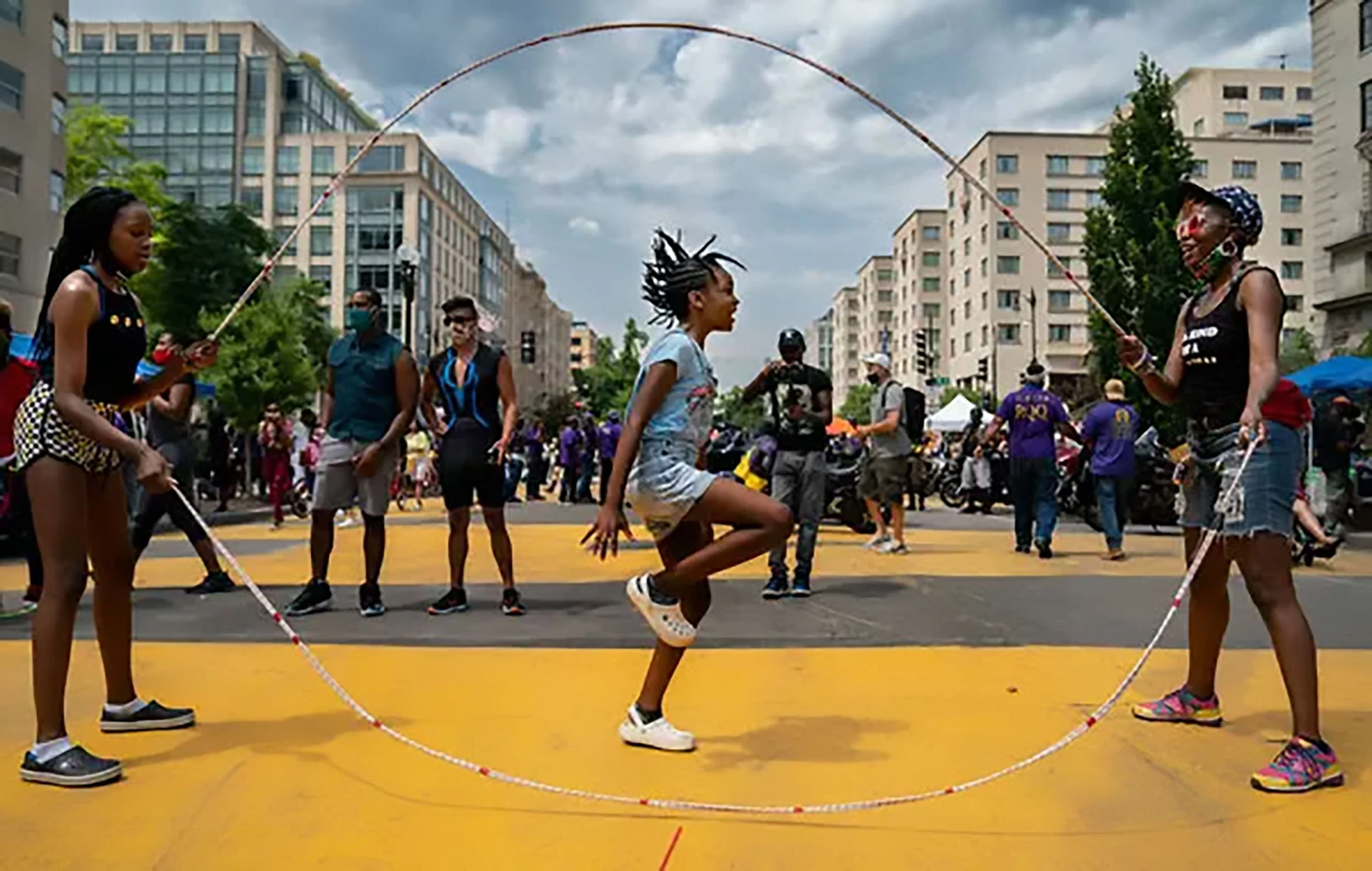
OUR COMMITTMENT TO BLACK WOMEN & GIRLS
TUAF has always been grounded in this truth: feeling safe is a necessity for all Black people, but particularly for Black women and girls.
Where vulnerability is required, safety is mandatory.
This means:
Safe space for all women and girls - no matter how they are presenting
No ableism - we honor all bodies, all minds, all ways of being
No homophobia, no transphobia - come as you are, identity is sacred, your personhood is honored
No patriarchy, no sexism- Power is shared, all genders are valued, protected, and respected
No racism, no colorism - Blackness is honored, every shade is sacred
We center Black women and girls - not as afterthought, not as inclusion, but as the foundation of our liberation work.
Because women and girls are the soul and anchor of community, the lifeblood and lifeforce of how we, as a people, thrive… together.
Our Guides
We walk in the footsteps of those who showed us the way:
Audre Lorde taught us that "caring for myself is not self-indulgence, it is self-preservation, and that is an act of political warfare."
bell hooks showed us that "the classroom, with all its limitations, remains a location of possibility" - and that love is both personal and political practice.
Toni Morrison reminded us that "definitions belong to the definers, not the defined" - we define ourselves, for ourselves.
These women taught us that liberation work must center those most marginalized. Their wisdom guides our practice.
How This Shows Up in Our Work
In our spaces:
We create conditions where Black women and girls can breathe, create, and be
We refuse patriarchal hierarchies (hence our Bicameral Leadership Model™)
We practice Audre Lorde’s wisdom that creativity is life force
In our pedagogy:
We honor bell hooks' vision of education as the practice of freedom
We make room for all bodies, all minds, all expressions
We build beloved community, not competitive spaces
In our methodology:
CLP emerged from Black women's intellectual and creative labor
We repudiate supremacist ideologies - white supremacy, patriarchy, ableism, homophobia, etc.
We practice what Toni Morrison preached: self-definition as liberation
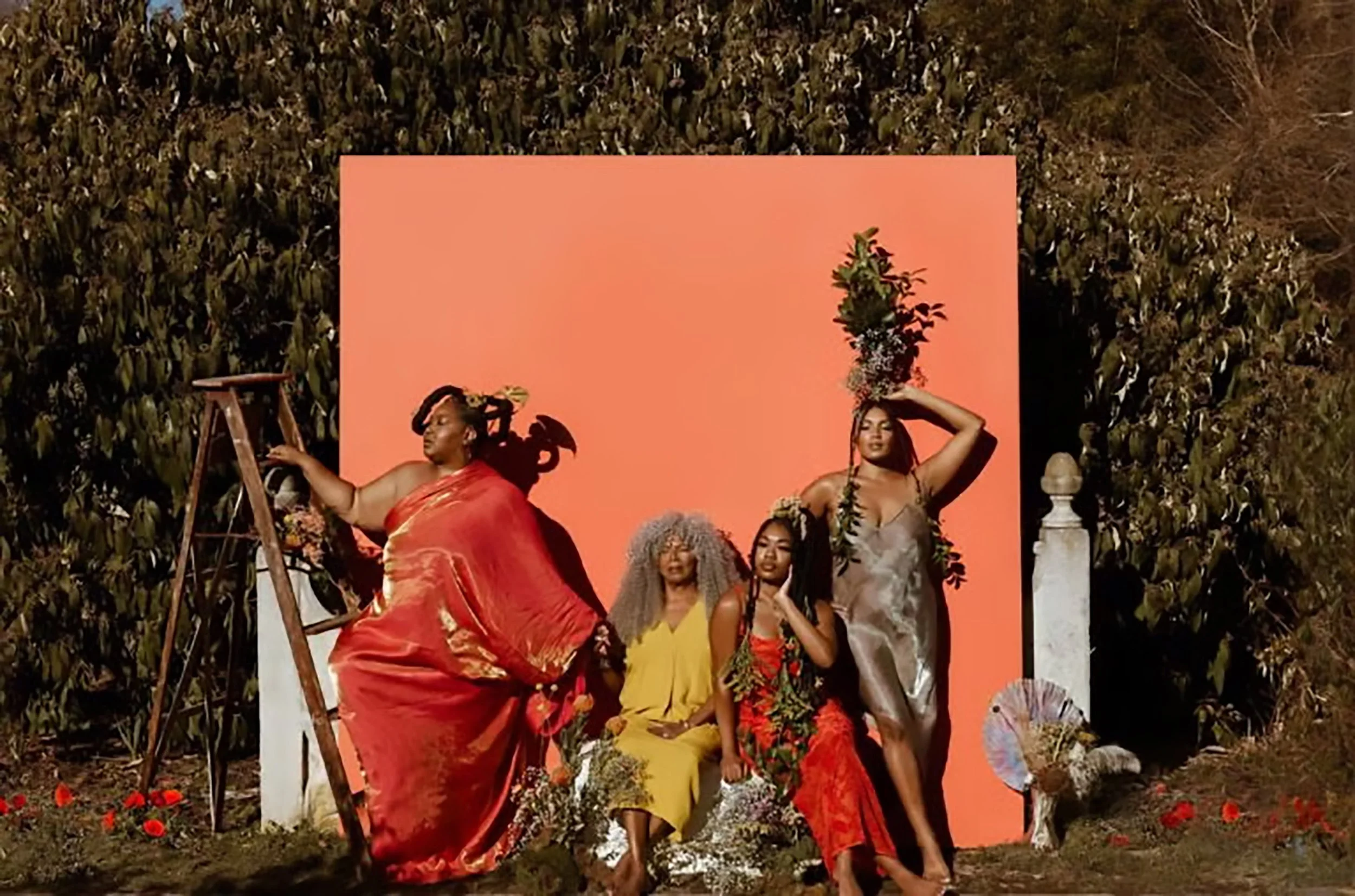
Photograph within Shakira Hunt's installation, "Give Me My Flowers – Soft Petals: exploring the mother wound”
“When the Master governs, the people
are hardly aware that she exists…
When her work is done, the people say,
“Amazing: we did it, all by ourselves!”
~Tao Te Ching, Chapter 17
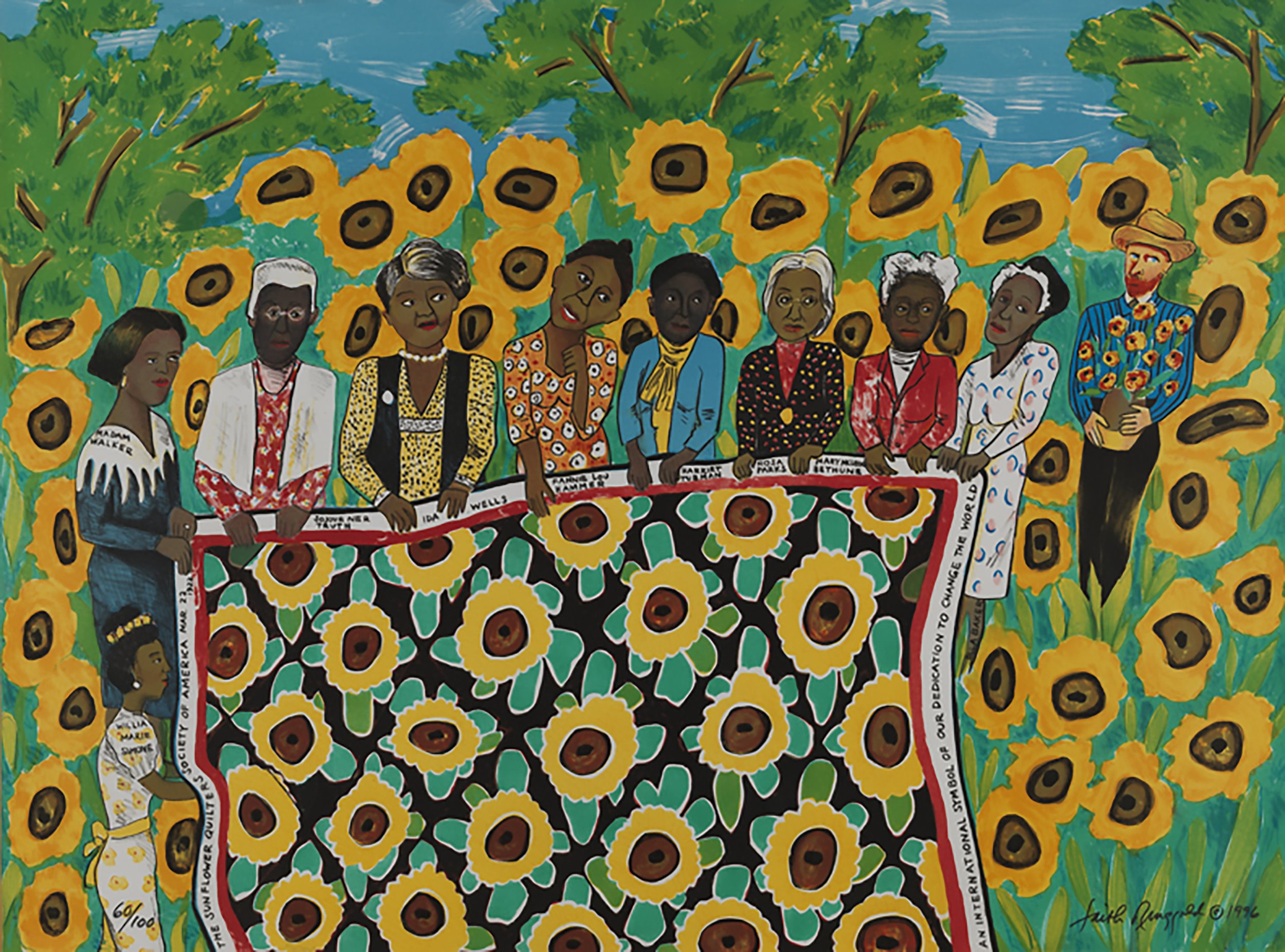
Image: The Sunflower Quilting Bee at Arles, 1991, by Faith Ringgold
This Is How We Work
We don't brand the communities we serve.
We don't plaster our logo on student work.
We don't create dependency.
We integrate the artisans.
We refuse to have our mission bought; we build what communities need, not what funders want to fund.
We teach communities to tell their own stories.
We come in. We serve. We train. We recede.
The work belongs to the people who created it.
That's why you won't see massive portfolios of "our" work.
Because it's not ours. It's theirs.
We are artists practicing liberation.
We are liberators calling creativity to the front.
We are proving that culture leads.
Contact us
Interested in working together? Fill out some info and we will be in touch shortly. We can’t wait to hear from you!